
Ecommerce platform for a small business depends on three decisions: product type (physical products vs digital downloads vs subscription box vs dropshipping), GMV tier (under $10K vs $50K vs $100K+ monthly), and operational shape (no-code operator vs WordPress-equipped vs design-led). For most US SMBs under $100K monthly GMV selling physical products, Shopify Basic at $39/month on Shopify Payments is the canonical default. For SMBs with existing WordPress sites, WooCommerce + hosting is the right answer. For design-led SMBs selling physical goods, Squarespace Commerce is the aesthetic + ecommerce combination. For tight budgets, Ecwid Free or WooCommerce + $15 hosting. The right answer for a B2C SMB is most often one of these four.
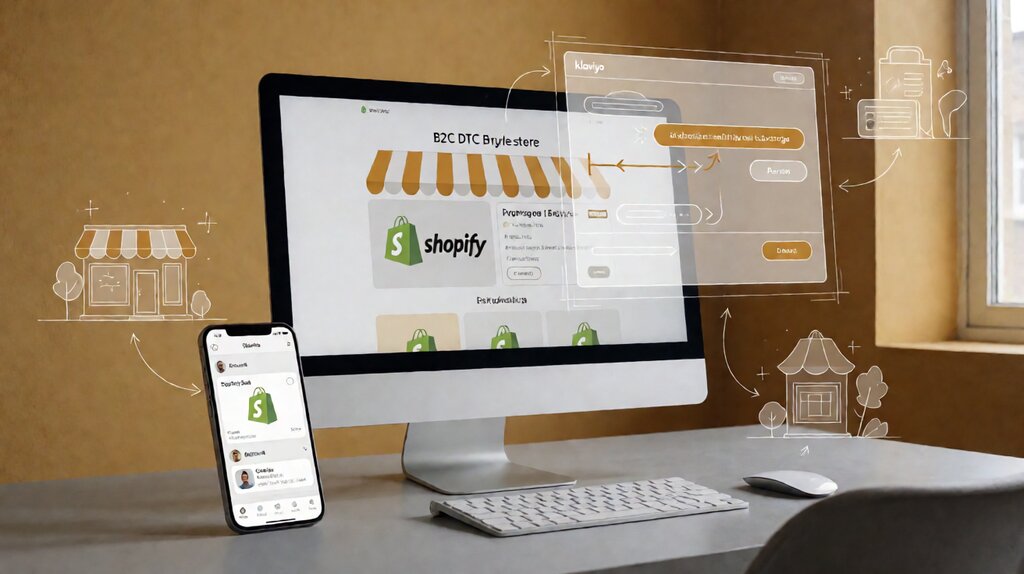
Run a quick stress-test: a five-person DTC brand operator selling $30K monthly GMV through Shopify Basic at $39/month on Shopify Payments. The platform runs the storefront, the cart, the checkout (with Klaviyo’s email automation in the background), the orders, the inventory, the fulfillment (FBA via Amazon Multi-Channel Fulfillment), and the customer service (Gorgias, an app that integrates with Shopify’s customer data). The platform’s total cost is $39/month + 600 x $1.75 gateway = $1,089/month. The operational choice: Shopify covers 80% of the needs out of the box; the remaining 20% (email, reviews, subscriptions) is apps in the $100-$500/month range.
Pick Shopify for a B2C DTC brand with $5K-$100K monthly GMV. Pick WooCommerce for a WordPress-equipped SMB. Pick Squarespace for a design-led physical-goods store. Pick Ecwid Free for the tightest budget. All four honor PCI-DSS at checkout and integrate with the canonical payment gateways (Stripe, Square, PayPal).
Key facts: Shopify Basic is $39/month + Shopify Payments 2.9% + $0.30 per US transaction. The platform covers storefront, cart, checkout, payments, fulfillment, and a $4 app per category (Klaviyo for email, Yotpo for reviews, Recharge for subscriptions). Shopify Capital offers financing on revenue ($5K-$500K advances). Shopify’s app ecosystem (8,000+ apps) covers 80% of SMB ecommerce needs. The platform’s per-transaction fee on external gateways (2% on Shopify Basic) is the dominant cost surprise; SMBs that prefer Stripe direct instead of Shopify Payments pay the 2% extra.
A US SMB doing $30K monthly GMV through Shopify Basic ($39/month) on Shopify Payments runs about $1,089/month in platform + gateway fees. The added app stack (Klaviyo $45/month, Yotpo $19/month, Recharge $99/month if subscription box) brings total to $1,300-$1,500/month. The Shopify platform + apps cost is a dominant operational cost for a B2C DTC brand.
The three B2C SMB scenarios that cover most operators
Three profiles cover most B2C SMB operators. Pick the platform that fits the scenario.

B2C DTC brand at $5K-$100K monthly GMV: Shopify Basic or Shopify. The canonical default. Eight reasons: (1) the deepest app ecosystem covers email, reviews, subscriptions, shipping, SEO; (2) Shopify Payments is the cheapest gateway (waives Shopify’s 2% platform fee); (3) Shopify Tax handles US sales tax by state and EU VAT; (4) Shopify Capital offers financing on revenue; (5) Shopify Fulfillment Network handles 3PL; (6) the Shopify admin is beginner-friendly; (7) the Shopify mobile app lets the operator manage the store on the go; (8) the Shopify community (Shopify Partners, Shopify Compass, Shopify Masters podcast) is the deepest in the SMB ecommerce space.
WordPress-equipped SMB adding ecommerce: WooCommerce + hosting. The operator keeps their existing WordPress setup (the blog, the content, the SEO) and adds ecommerce without leaving their content paradigm. Three reasons: (1) the operator’s existing technical staff can manage the WordPress backend; (2) WordPress SEO is stronger than Shopify’s for content-led commerce (a blog that drives organic traffic); (3) the platform cost is comparable to Shopify but the operator owns the full stack.
Design-led SMB selling physical goods: Squarespace Commerce. The aesthetic + e-commerce combination is the canonical pick for SMBs whose storefront image is the differentiator (fashion, jewelry, art). Two reasons: (1) Squarespace’s templates are the strongest in the SMB space; (2) Squarespace’s commerce platform handles physical goods with strong visual merchandising (multiple product images, color/variant storytelling). The SMB’s product photography + Squarespace’s design create the customer-facing store.
The three sub-scenarios within B2C ecommerce
Three specialized sub-scenarios within B2C SMB ecommerce.
Subscription box on Shopify + Recharge or Bold. Subscription box operators (HelloFresh, BarkBox, coffee-subscription-box creators) layer a subscription-platform overlay on top of Shopify. Recharge is the canonical subscription overlay at $99-$499/month + 0.5% of transaction. Bold is the alternative at $49-$499/month. The combined Shopify + Recharge + Klaviyo + shipping integration handles the entire subscription box flow. The relevant detailed math is covered in the subscription billing for SaaS page (with Recharge-over-Shopify as the analog for physical-product subscription).
Dropshipping on Shopify + DSers / Spocket / Printify. Dropshipping operators (one-product stores, print-on-demand products, niche-product-only operators) run Shopify + a dropshipping app. The dropshipping app pulls products from suppliers and routes orders to them; the operator does not hold inventory. The platform + apps + gateway fees still apply; the dropshipping supplier takes 20%-50% of revenue.
Digital downloads on Shopify or Memberful + Stripe. Digital downloads (courses, ebooks, presets, music) need a delivery mechanism. Shopify has a Digital Downloads app (free-$19/month); Memberful is the canonical platform for membership + digital downloads ($49-$1,200/month). The relevant comparison is on the digital-product overlay rather than on Shopify vs alternatives.
What the Shopify stack looks like in practice
Five layers and the typical app choices for a B2C DTC brand.
Layer 1: Storefront + checkout. Shopify Basic at $39/month. One free theme (Dawn is the default) or a paid theme ($150-$350 one-time). Shopify Payments at 2.9% + $0.30 per US transaction.
Layer 2: Email + reviews + support. Klaviyo at $45-$700/month (depending on list size). Yotpo reviews at $19-$499/month. Gorgias helpdesk at $60-$300/month. Total: $124-$1,500/month at scale.
Layer 3: Subscriptions (if subscription box). Recharge at $99-$499/month + 0.5% of transaction. Bold at $49-$499/month. The combined Shopify + Recharge subscription stack runs $138-$700/month.
Layer 4: Fulfillment. ShipStation at $9.99-$159.99/month (depending on orders). ShipBob at per-order 3PL pricing. Or in-house fulfillment with Shopify Shipping (pre-negotiated USPS / UPS / DHL rates).
Layer 5: Advertising + analytics. Triple Whale or Northbeam for cross-channel attribution ($100-$1,000+/month). Shopify Analytics for the basic. The advertising layer (Meta, Google, TikTok) is separate.
Total stack cost for a mid-scale SMB: $300-$2,000/month depending on volume + app choices. The platform + apps are a dominant operational cost; budget 6%-12% of GMV for the platform stack.
When NOT to use Shopify
Two scenarios where Shopify is the wrong answer.
Existing WordPress site with deep content investment. WooCommerce + hosting is the better answer. The operator keeps the WordPress content stack (Yoast SEO, the blog, the comments, the email opt-ins via Bloom / OptinMonster / ConvertKit).
B2B / wholesale catalog with 1,000+ SKUs. BigCommerce is the better answer. Native customer-specific pricing, customer groups, and quote-to-cash. The B2B scenario is covered in the ecommerce platform for B2B wholesale page.
The Shopify Capital financing edge
Shopify’s revenue-based financing is the hidden differentiator for an SMB that needs working capital.
Mechanics. Shopify Capital offers $5K-$500K advances against future sales (Shopify Pay Later to customers). The advance factor is 12% (the SMB pays back 12% over the original amount, typically 4-12 months). The advance does not require equity dilution; the SMB repays from the Shopify Payments balance.
Eligibility. Requires 3+ months of Shopify history with consistent revenue. The advance amount depends on the SMB’s GMV and trajectory. Approvals are common for SMBs with $50K+ monthly GMV.
Alternative. For SMBs not on Shopify, financing is via a bank loan (harder to qualify), a venture debt / SaaS line (requires institutional-quality financial statements), or a 3PL working-capital advance (more expensive). Shopify Capital’s advance is cheaper than most alternatives for SMBs with Shopify’s revenue trajectory.
Practical implications for a small business
Three decisions follow from choosing an ecommerce platform for a B2C SMB.
“Which payment gateway pairs with the platform?” Shopify Payments is the cheapest on Shopify Basic at $39/month (waives the 2% platform per-transaction fee). For WooCommerce, Stripe direct at 2.9% + $0.30 is the canonical choice. For BigCommerce, Stripe direct is the canonical choice (no platform fee on top).
“How is sales tax handled by state?” Shopify Tax handles US sales tax by state and EU VAT by member state. For WooCommerce, TaxJar is the canonical setup. For BigCommerce, the built-in tax engine handles basic state-by-state tax; for advanced setup, TaxJar or Avalara integration.
“What about shipping and fulfillment?” Shopify Shipping gives the operator USPS, UPS, DHL pre-negotiated rates. For in-house fulfillment, the operator does picking + packing + label. For 3PL, ShipBob is the canonical pick; Amazon Multi-Channel Fulfillment is the alternative for Shopify sellers who want Amazon’s warehouse.
Pick the right ecommerce platform for your B2C SMB
Pick Shopify Basic ($39/month) if you’re a B2C DTC brand with $5K-$100K monthly GMV and want the deepest app ecosystem + Shopify Payments as the canonical gateway.
Pick WooCommerce + hosting ($50-$100/month) if you already maintain a WordPress site and have technical staff.
Pick Squarespace Commerce ($36/month annual) if you’re a design-led SMB selling physical goods with strong visual merchandising.
Pick Ecwid Free / Venture ($0 / $39/month) if you’re on the tightest budget and your catalog is small.
For the practical 3-way vendor comparison on tier and features, the Shopify vs BigCommerce vs WooCommerce page runs the comparison. For the cost math at each GMV tier, the ecommerce platform pricing page covers the math. For the structural distinction between an ecommerce platform and a marketplace, the ecommerce platform vs marketplace page covers the distinction. For the broader vendor coverage (Wix, Ecwid, Squarespace) at each GMV tier, the best ecommerce platform for small business comparison covers the math. For the B2B wholesale scenario, the ecommerce platform for B2B wholesale page covers the canonical picks.
For the payment-processor cost math that drives the gateway fees across platforms, the payment processor fee comparison covers the per-transaction math at each processor tier. For the subscription box overlay on Shopify + Recharge, the subscription billing for SaaS page covers the analogous flow for SaaS products (where Stripe Billing is the canonical overlay).
For the dedicated ecommerce payment-processor context — the gateway choice and the operational setup of payment processing for an ecommerce-only setup — the payment processor for ecommerce page covers the integration layers and the right pick per GMV tier.
Last updated: October 2026