
A virtual mailbox works as the address for an LLC in two different ways, and the way you use it determines what is filed where.
As the LLC’s mailing address (the address the state and IRS send general correspondence to), a virtual mailbox is accepted in every state.
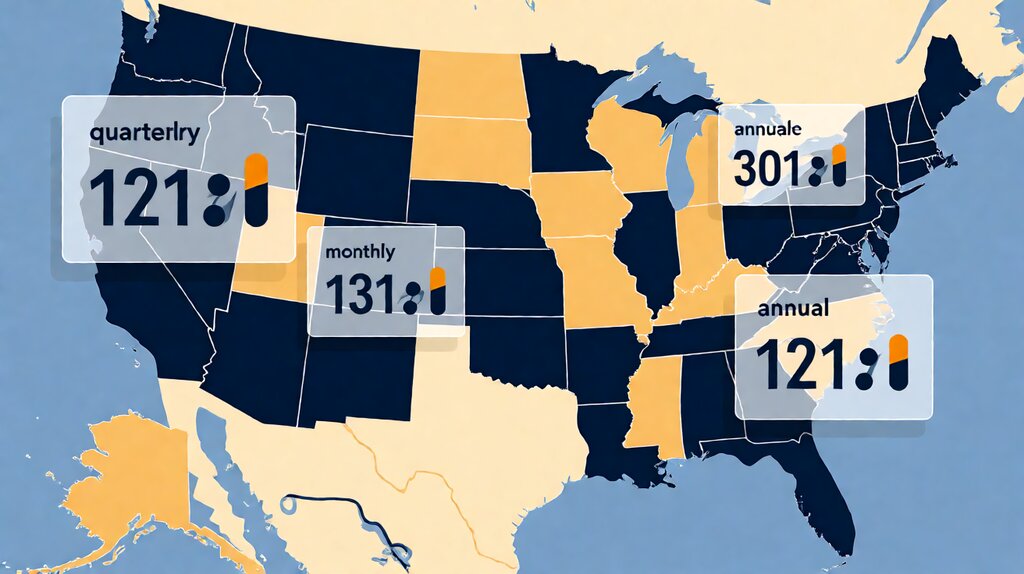
As the LLC’s principal office (the registered business location, where records are kept), a virtual mailbox is accepted in most states — with caveats for California, New York, and a few others where the principal office has a more demanding definition.
The reason this matters for most small businesses is that the distinction between “mailing” and “principal office” is the distinction between a one-page filing and a recurring compliance headache. Get the address right on the Articles of Organization and you don’t need to think about it for years. Get it wrong and you file a corrective amendment within 12 months.
Use a virtual mailbox as the LLC’s mailing address in every state without exception. Use it as the principal office in most states, especially Delaware, Wyoming, New Mexico, and Florida. Avoid it as the principal office in California and New York without first confirming with the state’s Secretary of State office.
Key facts: Every US state accepts a CMRA-registered virtual mailbox as the LLC’s mailing address on Articles of Organization. Most states also accept it as the LLC’s principal office. Most states still require a registered agent (which is technically separate from your mailing address), and most CMRA providers bundle registered agent service for $25-$49 per state per year.
If you are forming an LLC and the only address you have is a virtual mailbox, you still need a registered agent in the state of formation, separately.
Most virtual mailbox providers register you as the LLC’s registered agent at the same facility for a small per-state annual fee.
Trying to list the CMRA as the registered agent without that registered-agent service is the single most common filing mistake.
The four addresses every US LLC needs named in one place
Before you sign up with a virtual mailbox provider for your LLC, you need to understand that a US LLC has four addresses — and only two are commonly confused. Each address has a different legal meaning, a different set of people who receive correspondence, and a different address standard.
1. Principal office. The LLC’s primary business location. Where the LLC’s records, contracts, and operations “happen”. Used for IRS correspondence, KYC at banks, and many state filings. Can be a virtual mailbox in most states. Cannot be a PO Box in any state.
2. Mailing address. Where the LLC and the state send and receive general correspondence. Can be a virtual mailbox in every state. Can be a PO Box in some states for personal mail; for an LLC’s mailing address, the state’s Secretary of State typically requires a CMRA or commercial address.
3. Registered agent (RA) address. The address where the registered agent — a person or service authorized by the state to receive service of process — accepts lawsuits, state administrative notices, and compliance correspondence.
Every US state requires an LLC to maintain a registered agent.
The RA address is typically the address of the registered agent’s office, which is a “qualified” address by state statute.
A virtual mailbox alone is rarely enough; most virtual mailbox providers sell registered agent service as a $25-$49 per-state add-on to the CMRA address.
4. Operating state principal office. If you operate the LLC across states (for example, registered in Delaware but operating from California), you may also need a “principal place of business” or “executive office” address in the operating state.
This is the foreign qualification filing’s version of the principal office and has its own set of constraints.
A virtual mailbox can serve this in most but not all states.
| Address type | What to put | Legal requirement | Typical cost |
|---|---|---|---|
| Principal office | Virtual mailbox in a privacy-friendly state (Delaware, Wyoming, NM) | Real commercial address; cannot be a PO Box | Bundled with virtual mailbox |
| Mailing address | Virtual mailbox (or PO Box for personal mail) | A real address that receives USPS | Bundled with virtual mailbox |
| Registered agent | CMRA facility’s RA service (or third-party RA like Northwest) | Required in every state of registration | $25 — $300 per state per year |
| Operating state principal | Where you actually work — co-working desk, home, or principal office | Required for foreign qualification in some states | Often free (home or desk) |
How the LLC uses the virtual mailbox day-to-day after formation
After the LLC is formed, the virtual mailbox is no longer a feature you’re testing — it’s the inbound channel for every piece of correspondence the business receives. The same address that accepted your Articles of Organization now accepts IRS notice CP-161, state renewal reminders, vendor contracts, customer checks, and 1099 forms from clients.
IRS correspondence. The IRS sends your EIN confirmation letter (CP-575), your annual tax reminder, any audit notices, and any returns or amended returns you mail in to your address of record.
The address on file with the IRS must be the principal office address listed on your EIN application — if it differs from your state’s Articles of Organization, you may receive mail at one address and IRS notices at another.
The virtual mailbox should be the address on both records.
State renewal and compliance mail. Annual reports, franchise tax, registered agent renewal notices, and any administrative action notices go to the LLC’s registered agent address. Most states require the registered agent’s address to differ from the principal office for audit-isolation reasons. This is why the two are technically separate services, even when bundled by the same provider.
Customer and vendor mail. Invoice payments by check, signed contracts, and vendor onboarding paperwork arrive at the address on file with the customer or vendor. Update the vendor’s customer-of-record or the customer invoice template the moment the LLC is formed — a check sent to the LLC’s address that doesn’t quite match the registered name or address gets returned to sender instead of being lost.
Bank correspondence. Banks send new account approvals, debit card PIN letters, occasional fraud notices, and physical statements (when you opt in) to the address on the KYC file. Most banks accept a CMRA address for personal accounts, but a smaller list accepts a CMRA address for business accounts. Bank-specific guidance is in the next section.

Where LLC mail actually goes first. When your Articles of Organization are filed, the principal office address is the address the state sends every renewal, report reminder, and administrative action to.
The bank question — where virtual mailboxes break LLC business accounts
The most common surprise for new LLCs is that banks treat virtual mailbox addresses differently across products. Personal banking generally accepts CMRA addresses without objection. Business banking is more variable, and the variability is what you want to plan around.
Bank of America, Chase, Wells Fargo (national banks). Most national bank business accounts will accept a CMRA address but the branch experience can vary: branches may request proof of a physical presence at the address if the LLC’s industry is operating-from-home-sensitive (often healthcare, financial advisory, or licensed services). Some branches accept; others request a different address. This is not state-regulated; it is branch-policy variability.
Mercury, Relay, Bluevine, Found (online business banking). Most modern online business banks accept a CMRA address without objection because they don’t have branches. Mercury specifically accepts CMRA addresses for most LLC accounts and finds them neutral. Relay and Found are similar.
State-chartered credit unions and community banks. Many community banks will request a physical address for the LLC’s principal office before opening a business account.
The reasoning is sound — a community bank wants to be able to send a representative to the address if the account goes into default, and a CMRA facility doesn’t represent the LLC’s operations.
Use the virtual mailbox for a community bank application only if the bank confirms acceptance in writing first.
Foreign bank applications. For non-US founders using Mercury, Relay, or Payoneer to receive US payments, the CMRA address is universally accepted. For European banking, a CMRA address may need additional review because the EU’s KYC regime checks the registered address against a corporate registry; CMRA addresses are generally absent from European corporate registries and so require additional explanation.
The IRS, the Form 1583, and the privacy boundary
An LLC’s EIN letter arrives at the address you listed on Form SS-4.
Make the principal office address on Form SS-4 match the principal office address on your Articles of Organization.
If you list your home on one and a virtual mailbox on the other, the IRS will update its own records based on whatever Form 8822-B you file later — but it’s a wasted round trip.
Form 1583 for LLCs. The LLC’s mailing address on Form 1583 must match the address on the LLC’s EIN application.
The person signing Form 1583 (typically the LLC’s manager or sole member) provides their personal ID.
Form 1583 authorizes the CMRA to open and forward the LLC’s mail to the address the LLC actually uses — often the home of the LLC’s owner, often a P.O. number in a different country.
This is one of the few places the LLC’s owner has full control over routing.
What stays private and what doesn’t. Your home address stays off the LLC’s filings as long as you list the virtual mailbox on Articles of Organization.
Your home address stays off your EIN application if you list the virtual mailbox on Form SS-4.
The trade-off: the CMRA address becomes a public record, and you’ll receive robocalls, scammy “compliance notice” letters, and ephemeral-registration spam to that address on a recurring basis.
That’s the price of privacy.
For the broader picture on how the address unlocks a complete mailbox workflow (open-and-scan, forwarding, check deposit, registered agent), the virtual mailing address page covers the address-specific decisions and the privacy trade-offs.
The honest traps — where the LLC + virtual mailbox combination breaks
Three traps consistently catch first-time LLC operators using a virtual mailbox. None of them will be in the provider’s marketing copy.
Form mismatch. The state’s Articles of Organization, IRS Form SS-4, EIN application, registered agent appointment, and the bank KYC all list an LLC address. If any two of those are different, mail gets split across two locations and 30-day delivery windows slip. Audit the four addresses once a quarter and keep them aligned.
Provider’s address on bank letter, not yours. The bank’s new account welcome packet may list the bank’s processing center address rather than the LLC’s CMRA address. Read the envelope’s return address, not the to-line, before assuming a piece of mail is yours.
Bank drop shipments and customer 1099s. When a customer pays your LLC, the 1099 they issue goes to the address of record on the IRS’s master file.
If the address is the virtual mailbox, the 1099 lands there.
If the customer hasn’t updated their records, the 1099 may go to the LLC’s old home address or to a former accountant.
This is not the virtual mailbox’s fault; it’s a customer-vendor data drift that is your problem to close.
Choose a virtual mailbox for LLC if the scenario actually fits
Choose a virtual mailbox for your LLC if you can answer yes to at least three of: (1) you don’t have a physical office that would be suitable as the LLC’s principal office;
(2) you want your home address off the LLC’s public filings; (3) you will receive IRS correspondence, state notices,
and bank letters at this LLC’s address; (4) you would open the LLC online and want to skip a flight to the state of formation;
(5) the LLC’s state of formation accepts CMRA addresses as the principal office.
Skip a virtual mailbox for your LLC if you can answer yes to at least one of: (1) you have a real office that already serves as the LLC’s principal office;
(2) the LLC must operate in a state where the Secretary of State explicitly disallows a CMRA as the principal office;
(3) your bank has confirmed in writing that it will not accept a CMRA as the LLC’s address;
(4) you are not willing to complete and notarize USPS Form 1583.
For the operational side — how the address becomes part of the digital mailbox workflow (open-and-scan, forward, hold, shred, check deposit) — the virtual mailbox explained page walks through the full flow.
For the provider-level comparison, the best virtual mailbox service for small business comparison covers the providers worth picking from today.
For the next step — actually opening the US LLC if you are a non-resident — the opening US LLC as non-resident walkthrough covers the registered agent, EIN, and bank account steps in order.
Last updated: October 2026